

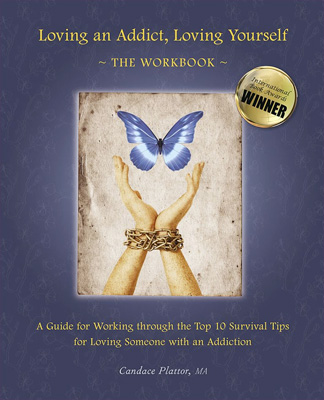
I have some wonderful news to share with you. Loving an Addict, Loving Yourself: The Top 10 Survival Tips for Loving Someone with an Addiction has been awarded the Gold Medal in the Non-Fiction — Social Issues category of the 2026 Readers’ Favorite International Book Award Contest. This comes shortly after the book received a 5-star professional review from Readers’ Favorite, which described it as “a timely self-help guide and a supremely honest and helpful resource for those who love someone in active addiction.”
Of course, I’m thrilled and very grateful for both of these recognitions. And when I learned about the Gold Medal, my thoughts went almost immediately to the people I wrote this book for in the first place—the parents, partners, siblings, grandparents, adult children and friends who love someone struggling with addiction. And because September is Recovery Month, it feels like an especially meaningful time to talk about them.
When Someone You Love Has an Addiction, You Are Living With It Too
If you love someone with an addiction, you already know that their addiction doesn’t affect only them. Before long, it can begin affecting almost every part of your life too. You may find yourself wondering what mood they’ll be in when they come home, or whether they’ll come home at all. You may lie awake at night imagining everything that could go wrong, check your phone constantly, lend money you know you shouldn’t lend, pay bills that aren’t yours to pay, or keep things from family and friends because you don’t want them to know how difficult things have become.
Through all of this, you may tell yourself that you’re simply doing what anyone would do for someone they love. I understand that, because so much of what loved ones do comes from a genuine place of love, fear and concern. But there is a question I often ask families that can be difficult to answer: Is what you’re doing actually helping?
Nobody sets out to enable an addiction. Enabling usually begins with very good intentions. You don’t want your loved one to lose their job, so you call in sick for them. You don’t want them to lose their home, so you pay the rent. You don’t want them to be hungry, frightened, embarrassed or in trouble, so you step in and make the immediate problem go away.
The difficulty is that when we repeatedly prevent someone from experiencing the consequences of their choices, we may also be giving them one less reason to make a different choice. That’s a very hard thing for a loved one to hear, especially when everything they’ve been doing has come from a place of caring. But understanding the difference between helping and enabling is often where meaningful change begins.
This is one of the reasons I wrote Loving an Addict, Loving Yourself. I wanted loved ones to understand that setting a boundary doesn’t mean they have stopped loving someone. Saying no doesn’t make you uncaring, and allowing another adult to experience the consequences of their choices doesn’t mean you’ve abandoned them. Sometimes the healthiest thing we can do for someone we love is to stop doing for them what they need to begin doing for themselves.
You Can Begin Making Changes Even If They Don’t
One of the most important things I want loved ones to understand is that you don’t have to wait for the person with the addiction to change before your own life can begin to change. You don’t have to wait until they stop using, agree to treatment, acknowledge the problem or approve of the boundaries you decide to put in place.
You can begin looking at your side of the relationship today. You can decide what behaviour you will and won’t accept in your home. You can decide whether you’re going to continue giving money, making excuses, covering up consequences or allowing yourself to be treated disrespectfully. Those are your choices to make, just as the choices your loved one makes about their addiction belong to them.
This isn’t about becoming cold or uncaring. In fact, I believe we can love someone very deeply while also refusing to participate in behaviours that are hurting them and hurting us. Learning how to do that is at the heart of the work we do every day at Love With Boundaries.
Recovery Month Is About Loved Ones Too
During Recovery Month, we rightly celebrate people who have found recovery and those who are taking courageous steps toward it. We also recognize the counsellors, treatment providers, peer workers and communities that help make recovery possible. I would like us to make room in that conversation for the families and loved ones as well.
I’ve seen families become so focused on whether their loved one is using that they stop asking themselves how they are doing. Their own lives become smaller. Friendships disappear, plans are cancelled, finances suffer, relationships become strained and almost every decision begins to revolve around what the person with the addiction might do next.
Loved ones need their own kind of recovery from that pattern. They need opportunities to rebuild trust in themselves, rediscover what brings them joy and learn that it is okay to have a good day even when the person they love is struggling. You are allowed to laugh, sleep, travel, spend time with friends, enjoy your home and make plans for your future. Taking care of yourself isn’t a betrayal of someone you love; it is part of creating a healthier relationship with yourself and, ultimately, with them.
What This Gold Medal Means to Me
I’m very proud that Loving an Addict, Loving Yourself has received the Gold Medal, and I’m grateful to Readers’ Favorite for recognizing both the book and the importance of this issue. Their reviewer wrote that the book “pairs tough truth with practical self-respect,” and that phrase has stayed with me because it describes so much of what I’ve tried to teach families over the years.
But what matters most to me about this recognition is that it may help the book reach someone who needs it. Maybe that will be a mother who is awake at 2:00 in the morning wondering where her adult child is. Maybe it will be a spouse who is beginning to realize that they can’t keep living from crisis to crisis. Or perhaps it will reach someone who has spent years trying to save the person they love and is finally beginning to understand that they deserve support too.
If that sounds familiar, please remember that although you may not be able to change the person you love or make them choose recovery, you are not without choices. You can change what you’re willing to participate in. You can learn how to set healthier boundaries, get support and begin reclaiming parts of your own life that may have been lost along the way.
You don’t have to stop loving the person who is struggling with addiction in order to make these changes. You can love them and love yourself at the same time. That is the message at the heart of Loving an Addict, Loving Yourself, and it is why receiving this Gold Medal means so much to me.
If someone you love is struggling with addiction and you’re finding it difficult to know what is helping, what may be enabling, or what your next step should be, the Love With Boundaries team is here to support you. Book a complimentary 30-minute consultation.




Leave a Reply